What Gets Recognized Gets Repeated: Dr. Bob Nelson and Mario Tamayo on Building a Culture of Recognition | Ep. 107
Most managers believe they are recognizing their employees well. Most employees have a very different experience. That gap, between intention and impact, is one of the most expensive and overlooked problems in leadership today.
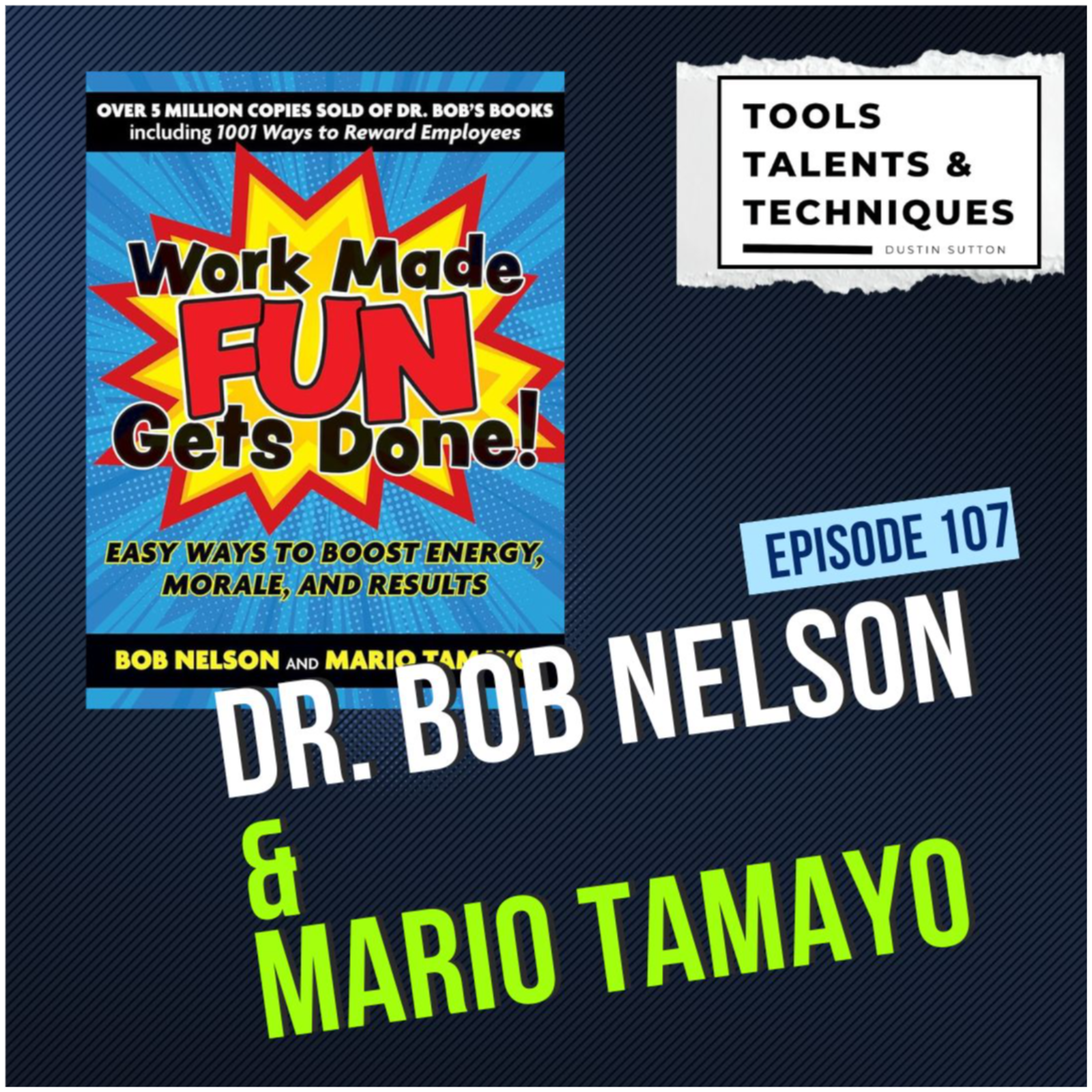
In Episode 107 of Tools, Talents, and Techniques, Dustin sits down with Dr. Bob Nelson, the number one management guru in the world three years running, and Mario Tamayo, founder of the Tamayo Group, to unpack why employee recognition is one of the most powerful and underutilized tools available to any leader, and exactly what to do about it.
The Recognition Gap: What Managers Think vs What Employees Experience
Ask most managers if they recognize their employees and the answer is yes. Ask those same employees and the answer is often very different. Dr. Bob Nelson has spent decades studying this disconnect and the data is consistent. Leaders consistently overestimate how much recognition they are providing and underestimate how much it matters to the people they lead.
The gap is not usually about intention. Most managers genuinely want their teams to feel valued. The problem is that recognition often gets deprioritized when things get busy, delivered in generic ways that do not land, or skipped entirely because the manager assumes the work speaks for itself.
It does not. People need to hear it.
Why Personalized Recognition Outperforms Generic Rewards
One of the most practical insights in this conversation is the difference between recognition that actually motivates and recognition that feels like a checkbox. Dr. Nelson is direct about this. Generic rewards like gift cards or company-wide emails do very little to build genuine engagement. What moves people is recognition that is specific, timely, and personal.
That means knowing what matters to each person on your team. Some people want public acknowledgment. Others prefer a private conversation. Some are motivated by growth opportunities. Others by flexibility. The leaders who take the time to understand those differences and act on them consistently build teams that are more loyal, more productive, and more willing to go the extra mile.
Recognition Does Not Have to Cost Money
One of the most memorable lines from this episode is simple and worth repeating. Recognition does not have to cost money. A handwritten note, a genuine thank you in a one on one, calling out someone's contribution in a team meeting, taking five minutes to ask someone how they are doing and actually listening. These things cost nothing and compound significantly over time.
Mario Tamayo builds on this by talking about the culture that forms when recognition becomes a consistent practice rather than an occasional event. When people know that good work will be seen and acknowledged, they are more likely to do it again. What gets recognized gets repeated.
The Role of Soft Skills in Modern Leadership
Both Dr. Nelson and Mario emphasize that the technical skills of management are far easier to teach than the human skills. Listening, empathy, giving genuine feedback, creating psychological safety, recognizing effort not just results. These are the things that separate managers who retain great people from managers who lose them.
The conversation also touches on hiring for cultural fit and long-term potential over pure credentials, and why learning from mistakes openly and without blame is one of the most powerful culture signals a leader can send.
Key Takeaways
- The gap between how managers perceive their recognition efforts and what employees experience is one of the most costly and overlooked problems in leadership
- Personalized recognition is significantly more motivating than generic rewards
- Recognition does not have to cost money. Consistency and specificity matter more than budget
- What gets recognized gets repeated
- Soft skills are the hardest to teach and the most important to develop as a leader
- Hiring for cultural fit and long-term potential builds stronger teams than credentials alone
- Learning from mistakes openly is one of the most powerful culture signals a leader can send
Connect with Our Guests
- Dr. Bob Nelson: https://drbobnelson.com/
- Mario Tamayo: https://www.tamayogroup.com/
Listen to the Full Episode Catch Episode 107 of Tools, Talents, and Techniques on Apple Podcasts, Spotify, YouTube, or at toolstalentstechniques.com
About Tools, Talents, and Techniques Hosted by Dustin Sutton, Tools Talents and Techniques is a podcast for founders, operators, and professionals who want to go deeper than surface-level success stories. Every episode unpacks how high performers think, decide, and build things that last.
PODPAGE BLOG SETTINGS
Permalink: dr-bob-nelson-mario-tamayo-employee-recognition-leadership
SEO Title Tag: Dr. Bob Nelson & Mario Tamayo on Employee Recognition | Ep. 107
SEO Meta Description: Dr. Bob Nelson and Mario Tamayo break down the recognition gap, why personalized appreciation drives performance, and how to build a culture where people thrive.
Diverse Paths to Impactful Leadership: James Robertson on Commercial Real Estate, Community, and Career | Ep. 26