
 YouTube
 Apple Podcasts
 Spotify
 iHeartRadio
 Ep. 113 | Data Ownership Is the New CRE Advantage | Bill Douglas - OpticWise
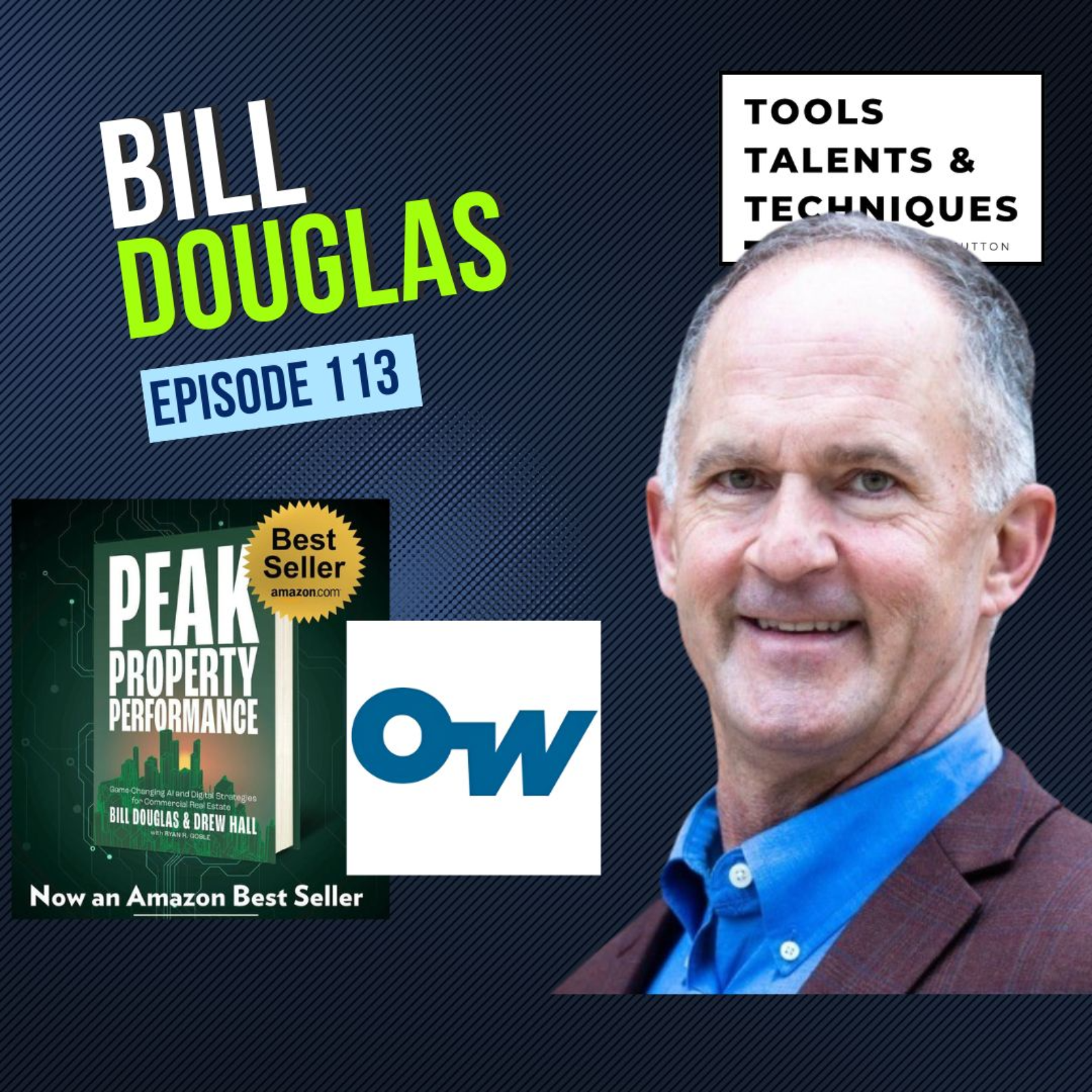
Bill Douglas has had more than one moment that changed the trajectory of his life. In this episode, he shares the wild story behind one of them, and how it shaped the way he thinks about resilience, risk, and building a business that lasts.
Bill is the founder of OpticWise and co-author of Peak Property Performance, a Fast Company Press bestseller. His company helps commercial real estate owners take back control of their data and digital infrastructure instead of leaving it in the hands of vendors. Bill brings decades of experience applying modern technology to one of the slowest-moving industries out there, and he has the war stories and the wins to back it up.
This conversation covers life lessons that go way beyond real estate, the entrepreneurial mindset that got Bill here, and why data ownership might be the single most overlooked advantage available to property owners today.
🔑 What You Will Learn
- The life-changing lesson Bill learned from a near-death experience with a coral snake
- How Bill built and grew a business by applying modern technology to an old industry
- Why data ownership and digital infrastructure are becoming the real differentiators in commercial real estate
- How smart delegation and empowering your team changes everything about how you lead
- What the future of commercial real estate technology actually looks like
🕐 Episode Chapters
00:00 Introduction to Bill Douglas and His Journey
01:57 The Coral Snake Bite That Changed Everything
09:35 Twenty Years Later: A Skiing Accident to the Day
12:52 Choosing Accountability Over a Lawsuit
15:28 The $100,000 Tip and Empowering Employees
18:45 Bill's Five Questions for True Delegation
21:45 How Bill Found Commercial Real Estate
24:53 Why Owners Resist Adopting New Technology
28:05 The Question That Sparked the Book
33:43 Machine Learning, NLP, and Robotics in CRE
37:50 Due Diligence and the Hidden Value of Data
40:21 Which Asset Classes See the Biggest Impact
43:06 Setting Up Part Two
OpticWise: https://www.opticwise.com
🔗 Connect with Bill Douglas
LinkedIn: https://www.linkedin.com/in/billdouglas/
Website: https://www.opticwise.com
Peak Property Performance (book and podcast): https://www.peakpropertyperformance.com
🎙️ About Tools, Talents, and Techniques
Hosted by Dustin Sutton, Tools Talents and Techniques is a podcast for founders, operators, and professionals who want to go deeper than surface-level success stories. Every episode unpacks how high performers think, decide, and build things that last.
📲 Subscribe and leave a review if this episode brought you value.
Unknown Speaker (0:14): The delay there.
Dustin (0:16): Oh man. It's a good, it's just great to have you here to talk about all these things. Everything that you talk about that we just spoke about briefly, as far as the entrepreneurship, the commercial real estate, the technology, life lessons that you've learned. I'm excited to learn all about it. So without any further ado, listeners, guests, I can't wait for this conversation.
Dustin (0:39): I hope you enjoy it. With me today is the CEO of Opticwise, also the co author of Peak Property Performance, Mr. Bill Douglas. Welcome to the show.
Unknown Speaker (0:49): It's a pleasure to be here, Dustin. Thank you. We've been joking about doing this for a while. It's nice to finally get here.
Dustin (0:55): Yeah, yeah, yeah. But hopefully, I know for me, it's definitely already worth the wait and I'm excited to jump in. So before we do, could you just be with like a quick snapshot of who you are? I know it's hard, but like try to say who you are and what you do in maybe a minute and then we'll dive into it.
Bill Douglas (1:12): Somebody asked what I do. I say I ski, hike, bike, and golf. And I like to spend time with friends and family. And then they'll say, You don't have to work. And I was like, Yeah, I choose to work, and I have to work, and you didn't ask me what I did for work.
Bill Douglas (1:25): Relative to optic wise, I'm not the founder. Drew Hall was the founder. I joined it about eleven years I'm a Georgia Tech educated mechanical engineer that went to MIT for entrepreneurial master's program twenty years later. And I like to grow small businesses. I like to take technology that has worked in other industries and find old, slow industries that was what attracted me to commercial real estate and apply solutions to those industries that have worked in other industries.
Bill Douglas (1:53): So we're not inventing a lot, we're applying a lot. And then of course, we have to write all of our own solutions and make it work. So I have done that, and this is my sixth company since I became a real entrepreneur at 28 after I was bit by a coral snake. So that's probably a fun story. But that's me in a nutshell.
Bill Douglas (2:11): I don't live to work. I work because it enables my life. I live for unique shared experiences with friends and families. I think life is a gift.
Dustin (2:19): I love that on so many different levels, but hold on a second. The coral snake. What happened? Where were you? What happened?
Bill Douglas (2:26): I was working for Florida Power and Light after I graduated from tech. I went back to Florida because I grew up in Fort Lauderdale. And I was working there, and I took a week off to build a deck for my parents. They lived in Plantation, Florida, which is on the West Side of Fort Lauderdale. And I was standing in a hole that I had built, that I had dug for a post, and I was drilling through a six by six piece of wood.
Bill Douglas (2:49): And I felt something on the back of my leg, and I just thought it was a wasp, and I kept going because I had leveled this piece of wood. I wanted to finish drilling it. Right? And I turned around, and there was some blood on my leg. So I walked in the house, and thankfully, my dad was working from home that day.
Bill Douglas (3:05): This was more than thirty years ago, so working from home was pretty rare. And I said, I think I got bit by a wasp. Do have any cortisone or something? Because it hurts. And he said, yeah.
Bill Douglas (3:15): I'll be I'll be I'll be right back. And by the time he came back in this little house to the kitchen where I was standing, I was on the floor. So a coral snake is the most venomous snake in North America, and it's a neurotoxin. So it crawled up my leg, and when it got to my hip, I couldn't stand anymore because it's just paralyzing all the nerves that it gets to. Picture it moving through your right calf and just coming up.
Bill Douglas (3:39): When it gets to your midsection, your body loses control of other things. I don't need to elaborate. Use your imagination. When I got to my chest, we were five minutes down the road, five minutes from a hospital, and I couldn't breathe. So I said to my dad, who picked me up and carried me to the car, he was late fifties then, I think you could do that too if your kid weighed two hundred pounds and you had to pick him up.
Bill Douglas (4:04): I said, I can't breathe. You better not stop at any more red lights. By the time we got to the hospital, I was awake, but I was in full respiratory arrest. I couldn't do anything but blink. And they put me immediately on a respirator and all of the things for they thought I was bit or have an allergic reaction.
Bill Douglas (4:25): So then they did a blood test and found out what it was. So they kept me alive long enough to administer antivenom, which was horrible. It was painful and long and takes like eight hours and extremely painful. But I walked out of the hospital four days later. So not many people survive a coral snake bite.
Bill Douglas (4:42): And I did. I was in good shape then. Was racing bicycles as a hobby, not a full time job. But the doctor said, Because my heart rate was so low and I didn't panic, I didn't circulate the venom very much as fast as if you panicked and saw it or if you weren't as in good shape. My resting heart rate was in the low 40s then, so didn't circulate as fast.
Bill Douglas (5:02): And that bought me five or ten more minutes until my dad got me to the hospital. So while I was laying in the hospital, I I love Florida Power and Light. I had worked there all through college every summer, and I had worked there five years, and I had doubled my salary in five years, and I was on a track. I realized I didn't want to do that my whole life. I didn't want to be a corporate jockey.
Bill Douglas (5:21): I had been dreaming of this company I wanted to start. And while I was laying there told I wasn't going to make it through the day, the doctor said, Bill, I'm gonna give you an antivenom. If you give me permission, you have to blink. If I don't give it to you, you'll die. But if I give it to you and you have allergic reaction, it'll kill you.
Bill Douglas (5:38): But what do you wanna do? So I blinked, I told him to give it to me. I didn't have any reaction to the typical I wasn't allergic to the typical things. Anyway, when I woke up, I decided by the time I left the hospital to quit my job. My boss was very cool about it.
Bill Douglas (5:55): He got me early retirement, paid me out of the pension plan because I had eight years working with a company, I used that money to start my first real company. I've been an entrepreneur since I was 12, making money on the side with little businesses and things, but paid for my college that way, things like that. But that was a life reset. So within one month, Dustin, of walking out of the hospital, I jumped out of airplanes like I always wanted to. I quit my job.
Bill Douglas (6:21): I started a company and I proposed to my girlfriend. So be careful not to get bit by a snake because it'll change your life.
Dustin (6:28): Yeah, apparently. And so how big is this snake that we're talking? Is this-
Bill Douglas (6:33): It's less than a foot long. It's tiny.
Dustin (6:35): And it's one of the most venomous in North America, or the venomous
Bill Douglas (6:38): in It's the one that looks like a kingstake, red and yellow kill a fellow. The stripes are next to each other. Red and black is a friend of Jack. So it's the very same stripes, but they're in a different order, and it is not very big. So I got bit in Plantation, Florida.
Bill Douglas (6:54): I was in Broward General, and they called the Miami Serpentarium, and the head, whatever the snake guy is, the Serpentarium flew up because it's pretty rare to have a coral snake. He flew up with the antivenom in a helicopter. And then the next day, went with my dad in the backyard and found what I had disturbed was a nest, and mama was not happy. Yeah. Mama took care of that by biting me.
Bill Douglas (7:23): Coral snakes don't have fangs. They have smaller teeth, so they have to chew. And I was dumb enough to I was drilling through a big piece of wood, so the snake had a minute or two to work on my leg and I just kept going.
Unknown Speaker (7:35): And so when you say they found a nest, how many of these snakes would be in a nest? And then I want to kind of get off this snake topic. I mean, it's impressive what you I don't know the answer. Not change your life, but the snakes are kind of freaking me out.
Unknown Speaker (7:48): I really don't know the answer. I disliked snakes before that, but I really disliked snakes now. I mean, I see them and I just kind of curl.
Dustin (7:55): It's one of it's it's so weird that or it's it's interesting, I should say. As much as you dislike them and, like, how much it was the impetus to change your life in so many amazing ways.
Bill Douglas (8:06): It was it was a reset. Know? You take life I shouldn't say you. I had taken life for granted. I was making money.
Bill Douglas (8:14): I was having fun. I was in my twenties. What's not to like about it? Living two miles from the beach. Granted, it was a rented house, but still.
Bill Douglas (8:23): And then I realized I didn't really like a lot of that. I was just doing it. I liked my friends. I liked the fact that I was playing volleyball and riding bikes, but I didn't want a career working for the power company. I had this entrepreneurial spirit before I went to college.
Bill Douglas (8:38): Just because I graduated with an engineering degree didn't mean I had to take a corporate route. I had the ability to take risk. I had just died, in my opinion. So let's go start this business. If it fails, it can't be any worse than what I just went through.
Bill Douglas (8:55): Is literally what I thought laying there.
Unknown Speaker (8:57): There's a saying, wish I knew where well, I mean, I'm definitely gonna look it up after this, but it's like the secret to life is to die before you die. Like, that's like,
Unknown Speaker (9:07): I was gifted with that. Yeah. I mean, that was a blessing. It was brutal. It was a blessing.
Bill Douglas (9:15): Twenty years later, I've been active in the Entrepreneurs Organization for a long time, but the USA Today was running stories about how near death experiences change entrepreneurs' lives. And my friend said, Oh, you got to talk to Bill. He's got a great story about how he became a real entrepreneur. I mean, full time, no more W-two paycheck entrepreneur. Right?
Bill Douglas (9:35): You have risked everything to make a business work. So they interviewed me and they ran the article twenty years later to the day that I was bit by the snake. Wow. Well, on that day, I was skiing in Breckenridge with a friend slash customer, and I hit a snowmaker at 54 miles an hour skiing first run of the day. And I'm an expert skier.
Bill Douglas (9:57): I just didn't prerun the run, so I didn't know that this knoll was gonna throw me that far in the air. And I like these long jumps, but I went over this knoll, and I'm carrying it in the air. And in front of me is a permanent snowmaker. And I'm in the air. I can't turn.
Bill Douglas (10:13): So I woke up from that collision in Denver eight hours later. Surgery, a Flight for Life helicopter, paralyzed, laying there in a hospital. Twenty years to the day. And I was the last one they said in the article because I said life's a gift. It's meant to be pursued, shared, and savored.
Bill Douglas (10:32): It's not meant to be worked. So they ran that as the closing article, The USA Today. I still have it. It's on my desktop, that article, because I look at it occasionally when I feel like I'm doing anything mundane or repetitive without value. You know?
Bill Douglas (10:48): I broke thirteen bones and was paralyzed for four days, I think, and had several surgeries. It was a rough year to get back from. But
Unknown Speaker (10:57): What what was the what was the date? Like, what month and day?
Bill Douglas (11:01): It was February. I was 49. So I was 47. Excuse me. Because it was twenty years ago.
Unknown Speaker (11:09): I was 27 on the snake, 47 on the on the collision.
Dustin (11:14): Yeah, but to the day. I would have that circled on my calendar and be like, Stay inside that day. I'm like, Don't go outside.
Bill Douglas (11:22): I'm not superstitious. I still ski. I just ski a lot slower. 35, 40 miles an hour is enough.
Unknown Speaker (11:30): Well, I've skied once in my life and get it and I watch other people and it would be great to do. I'm like, Wow, that looks so amazing. But that's for you guys. There's plenty of other fun things for me to do. Yeah.
Unknown Speaker (11:44): Do plenty of other fun
Bill Douglas (11:44): things. Well, was one of the things I did with my sons when we were growing up, because every Saturday, my wife I'm married again, but my first wife and I decided we would not put the kids in daycare. So I relished the weekends. Spent Saturday with the boys because she had spent all week during the day. Right?
Bill Douglas (12:03): And then on Sundays was family time. So we, every time it snowed, we went skiing.
Unknown Speaker (12:07): Oh, that's nice.
Bill Douglas (12:08): We got thirty, forty days a year in skiing together. It was really nice.
Dustin (12:12): What what I've what I've seen people ski like what I did is not. It's not graceful at all. It wasn't graceful at all. But when I see people coming down the hill, the mountain, I'm like, oh, I get it. Like that is that is very.
Unknown Speaker (12:25): Graceful. Like, it is very, very smooth, and I can see how, you know, you gotta focus and you gotta just gotta be in that flow. It's amazing.
Bill Douglas (12:33): It it it is. It's fun. I was just stupid on the hill that day. Wasn't marked uphill and yada yada yada, and there was another guy in intensive care in the hospital in the next bed who had hit the same thing as me because they forgot to put a sign up up the hill. He had compound fractured both of his legs.
Bill Douglas (12:52): So I took it across my chest and caved in my chest, and it just paralyzed me because of the swelling and the damage to my spine. He probably will never walk normal again, so he went after the ski area. I chose not to. Wow. Yeah.
Bill Douglas (13:07): And I didn't want to teach my kids that's how you earn money. Five year federal lawsuit is not my idea of earning money. It was my fault. It was my fault. I did it.
Bill Douglas (13:17): So I'm accountable for it. I should have never gone that fast on the first run of the day where I didn't know it was beyond that knoll. To their credit, the knoll was gone. Within a week, the knoll was gone. They shaved it.
Dustin (13:29): You know what? So this is not nearly to the extent of what you're talking about, but I had an injury at a basketball gym years ago and it's a community center. You know, we, we've been a part of it for a long time. And then when I was injured, afterwards I had to go to the hospital and all this stuff and I had not signed a waiver or anything for that gym. And like a couple you know, the week later, the gym, the facility was calling me like, Hey, by the way, like, you know, you never signed this waiver.
Dustin (14:01): And there were I'm like, first of all, it was not your fault. Like, nothing like that you guys did. And, like, sure. I'll I'll sign it. But, like, I I I love that you said that because I remember thinking at the time, like, wow, this is something that people do.
Dustin (14:15): No matter whose fault it was or anything, they're like, hey, I got to pay for this or this and that.
Bill Douglas (14:20): Well, if it's somebody's fault, I understand that. If it's negligence, know, an accident is called an accident for a reason. It was an accident. They need snowmakers. It was my fault.
Bill Douglas (14:31): No. I get into the math and everything else. I know all about it now, but the only people that called me were the lawyers, not the ski area.
Dustin (14:39): Yeah. Well, and that shows your integrity as well.
Bill Douglas (14:43): Well, I had a business that was paying me. This is a great entrepreneur story. I had to take three months off because between the first surgery I had up in Dillon before they flew me down to the mountain and then I had another surgery, I literally couldn't work for three months. I mean, the therapy and the pain was ridiculous, and I couldn't even go to the office. I mean, it basically confined to my house for a while.
Bill Douglas (15:09): Walking around was all the work I could do. I went back to the office, I don't know, a little more than three and a half, three months later. The business had grown 25% without me. And I walked in, I knew it had because I could see the numbers. I was like, what are you all doing?
Bill Douglas (15:28): This is awesome. And I had a CFO, COO, and she is awesome. Selena said to me, You should just stay out. You should go visit customers. Why don't you just come in on Friday when we have foosball tournaments?
Bill Douglas (15:41): Because this is working. So basically, I ate some humble pie. My lesson was I was in the way. I thought I was helping employees, and I was actually holding them back. So it taught me to truly delegate because gravity forced me to crash and the crash forced me to quit for three months and the business grew.
Bill Douglas (16:04): It was humbling. At first, I felt like an idiot. Like, why didn't I do this years ago? Why was my ego keeping me involved? So then I came up with I came up with Bill's five questions.
Bill Douglas (16:14): And if if the answer to all five of these questions is yes, you will never be reprimanded. You will never be terminated. Like, from the company. You are empowered to make decisions. I do it with all my employees ever since.
Bill Douglas (16:26): I sit down with them and sign a legitimate piece of paper and turn it around like, I want you to make decisions. I do not want to be the funnel point for this business. And we've had some amazing success stories because of it. Crazy good success stories. An employee did something for a customer once.
Bill Douglas (16:45): We had a no fail guarantee and that they were going through a hurricane, so she spent $52,000 to keep this customer from failing, and it was all billable to the insurance and everything. So it wasn't like we were out the 52, but she didn't ask. She did it. My phone didn't even ring. I knew there was a hurricane going through New Jersey.
Bill Douglas (17:03): Seven months later, the customer called me up on December 30 and said, I need you to send me an invoice tomorrow. I was like, why? We're current. He said, because I wanna give you a tip. And I was like, what do you mean a tip?
Bill Douglas (17:15): We're not a service business. I mean, we are, but he said, I want you to bill me for a $100,000. I said, excuse me? He said, because you kept us online when that guarantee that guarantee is we were able to buy our competitor last month, and I'm just gonna say thank you. I was like, so I took the $100 and gave it back to all the employees.
Bill Douglas (17:36): We didn't distribute it to the owners, the shareholders. We put it through in proportion to their annual salary and gave it back to them because they earned that. We didn't. I mean, showed up as revenue and expenses, so it was a wash. The net profit was no different.
Unknown Speaker (17:50): And when was this? How long ago was this?
Bill Douglas (17:51): Oh my gosh. Probably 2012.
Unknown Speaker (17:55): Okay. Yeah. Wow. That's amazing.
Bill Douglas (17:57): It was because of that, because of accountability and empowerment, she made a decision to keep a customer online. And it was all fine and good, the customer was happy, but then the customer was so happy they sent us a $100,000 tip. It was crazy.
Dustin (18:11): And so, we all need more customers like that and people like yourself in that company that this, so this wasn't Optiwise, right? Is a company?
Bill Douglas (18:20): No, was my last company. Was called Essential Inc. Okay. Yeah.
Dustin (18:24): Okay. So, so for this, that you having that epiphany of this is how you operate. This is how you delegate. This is how you lead. You don't, you're not necessarily in that situation and with the customer, unless you have that first, right?
Dustin (18:44): Like these, these, these moments in your, in your life that have these paradigm shifts when you're like, okay, this, oh, wow. Look, that, that is the way to go. Like, that's so great to hear that you've had that experience and you've internalized them, and then you're sharing that with your team.
Bill Douglas (19:00): Well, realization was that I am not a good micromanager. I'm good at the vision and the strategy and keeping everybody aligned like we're going here, but the day to day actions, I'm not very good at that. Just that was cold water in my face. As much as I claimed to be good at things, it was obvious I wasn't because it grew when I wasn't around. Nothing else changed.
Bill Douglas (19:25): It wasn't like we were spending money on marketing or anything like that. We were just going through our normal 10 to 20% growth. It grew 25% in a quarter. I know some of that was sympathy sales because everybody's saying, hey. Did you hear what happened to Bill?
Bill Douglas (19:38): But still not 25%. That was crazy. I mean, it was millions in revenue. 25% was noticeable. It wasn't like we were earning $100 and it was 20 more.
Bill Douglas (19:48): I mean, the bump was millions of dollars. It was like, Woah. Okay. Yeah. So just what am I good at and stay in my lane.
Bill Douglas (19:59): Salima was obviously good at managing people. And she got to. She was responsible for it the whole time, but I was hovering. I was in the way. So she got to do what she was really good at and people love working for her, and she just made it sing.
Bill Douglas (20:12): I got out of the way so she could do her thing and everybody enjoyed it. So I would go visit customers and I would come in on Friday and do foosball table and have a beer. The worked, still I just didn't work in the office. It was back when we had offices. We had a really nice office.
Unknown Speaker (20:29): It was nice to be in.
Dustin (20:31): Well, and so leaders of people, leaders of companies, managers of things. When you start to realize like, this is I can't, I can't do everything, you know, and this person and you, and you kind of get out of the way and trust, trust your hiring, trust your processes and know that when they need to change, you change them quickly and thoughtfully. That that's something that I think is, is so much better learned through experience than reading in a book or something like that. Like you can understand it, you know, to some extent or, you know, from a book, but you really understand it when you when you go through it and you see it and you eat that humble pie as you as you mentioned.
Bill Douglas (21:12): School of Hard Knocks is Gotta a do it. Is a very good teacher. School of Hard Knocks, like you learn. You learn the hard way, but you learn. You don't forget it.
Unknown Speaker (21:21): Yeah. You're so told is something you did.
Dustin (21:24): So speak speaking of that, it's something that that you learned, and you said you like to go look at antiquated industries and see how you can apply things from other ones. Well, commercial real estate, you found it. You found it.
Unknown Speaker (21:37): I know.
Dustin (21:37): So I want to hear about like one, how you, how you identified this industry that we work in and what you thought versus what the experience has been since joining eleven years ago.
Bill Douglas (21:52): I've always kept a consultancy active because while I'm doing companies, I engage two clients at a time and help young entrepreneurs grow. And I it's my pro bono work. In between businesses, I turned it up and I do consulting and coaching. Right? I have a I call myself the resilience guy because of those two things.
Bill Douglas (22:11): Right? We should talk about the MS before the conversation's up too. But I I had turned up the resilience guy after I sold Essential Inc, and somebody I knew from church, Drew Hall, said, hey. I I'll pay you to do some consulting. Teach me how I can grow this business.
Bill Douglas (22:26): And he has a very nice technical business serving student housing. It was on campus student housing at the time. So I did a little three month engagement, and I delivered him a go to market plan. And speaking of staying in your lane, Drew's like, I'm the techie. I don't do all that stuff.
Bill Douglas (22:42): You want to do it? I'm compressing the conversation. I was like, I do want to do it. Yeah. I made the consultant's big mistake and fell in love with your client's company.
Bill Douglas (22:52): And he said, alright. Come on. Do it. So we started doing it together, and we stay in our lane. Like, he doesn't do what I do, and I don't do what he does.
Bill Douglas (23:00): And it's because not just because we don't want to because we recognize it better if we don't. And we have plenty of communication to make sure we're not stepping on each other's toes. The people that work for me are very different than the ones that work for Drew. So it has been a really nice relationship and a very fun company to have, and We didn't raise money for it. We did a little friends and family raise less than a $100,000 to do the first impetus for the original technology push that the operators needed.
Bill Douglas (23:32): And that's it. We've grown off of profit since. It's been a really nice run because some of my previous companies, I had professional capital. And they will steer your strategy based upon market wins or their desire to have capital exit or infusion. So I really didn't wanna do that on this one.
Bill Douglas (23:49): We didn't wanna go raise 5 or 10 or $20,000,000 like some of the ones I'd done before. So you asked what surprises me about this. It surprises me how often somebody says, I need you to do this for us. I need a proposal by Friday, and then I never hear from them again. They don't have the they don't have the the spine or the gumption to just say, no.
Bill Douglas (24:13): Thanks, or not now, or Never mind, or they just disappear. Stop calling, no email response, no nothing, they're holding the proposal that they needed in forty eight hours after you've been talking to them for ten weeks. Right? Hey. Like, the urgency came and went for them, and they don't even have the character or the integrity to say I'm not saying it's the whole industry.
Bill Douglas (24:36): This is what frustrates me about this one. And then the ones that say yes, lot of times, it's so hard to get it going because there's such a strong status quo bias. These buildings earn so much money. Another $500 a year per door or 60¢ a foot isn't going to make them motivated enough. Well, this year has changed because expenses have gone through the roof and rents have been capped.
Bill Douglas (24:59): But, you know, for the past five years, people were able to charge whatever they wanted to. So the our customers are the thought leaders. They're the ones that that see where it's going. They're okay to step out there. They want to do this.
Bill Douglas (25:11): They have a vision for their property. They are not just grinding numbers. If they're grinding numbers, they look at technology as an expense, and they don't want an expense. If they have a vision for the property, the client sees technology as an asset that generates a return. A very different equation.
Bill Douglas (25:29): So it's an investment just like you would invest in sticks and bricks and facades and carpet and countertops. And, you know, if it's an office building, a rooftop deck, who knows? Technology is equally and you invest for that. Right? So those are our clients.
Bill Douglas (25:45): And I am shocked at how many people in the commercial real estate world now are just chasing AI. I wanna buy AI. Remember five to seven years ago, they wanted to buy prop tech. I'm gonna go buy a prop tech, and we're gonna have virtual showings, and we're gonna everything was prop tech. And then there's so many prop techs and consolidation's so hard.
Bill Douglas (26:03): Now they're all like, hey. What are we doing for AI? What are we doing for AI? And they're buying from vendors that are selling AI prowess, but really not doing AI for the client. So this industry is definitely a follower when it comes to technology.
Bill Douglas (26:16): I'm not saying the whole industry, but the vast majority. And we can only grow as fast as they'll adopt. We have a lot more bandwidth than people say yes. But it just shocks me how many times they just block it off. I say, Give them the Heisman.
Bill Douglas (26:32): They're like, Nah, never mind. We're good. I earn enough money off my portfolio. I don't want to do anything else. Or they remember something twenty years ago that had the word technology in it that failed, and they think it's going to happen again.
Bill Douglas (26:45): So it's very slow to adopt, but it is a very large industry. And once we're in a portfolio, you know, the first one might take x months to do. And after that, they're like, hey. Can you do one a month? The first one's always really slow.
Bill Douglas (26:59): And and in most of that, it's educational. Resistance to change drops once the contract's signed. Most of the time, it drops when the boss signs it. You know, when she says, go do this, they do. They might fight it a little bit, but then they'll they realize, wait a second.
Bill Douglas (27:12): This property's earning more money, and I'm I have more time to spend with the tenants if it's a property manager. Or the asset manager is like, wow. I can see what's driving the numbers I've been looking at. I can look forward instead of backwards. So the asset managers and the prop property managers really love it after implementation.
Bill Douglas (27:30): During implementation, it's difficult. Owners are deal junkies. They like to run around and buy and build properties and trade properties. They don't wanna get down in the weeds down in the weeds, but the return on technology investment is so large. I keep you know, that's why we talk all the time, and we give away so many services for free just saying, look, if you let us review one property, we'll do it.
Bill Douglas (27:52): We'll do it. Like, if it doesn't give you a 10 x return on what we charge you, then it's free. That like, we will like, hey. Let us prove it to you. And if it's not if it's not at least a 10 x your investment, like, on what you pay us to do that, it's free.
Bill Douglas (28:07): Like, then we'll start then they're like, okay. So we're trying to think of ways to reduce resistance, which is status quo bias. It's not that they don't want to do it. It's just they're so comfortable in this lucrative lane.
Dustin (28:20): You know, it's the whole industry, in commercial real estate. And a way I've thought of it is like the expression, if it ain't broke, don't fix it. But if it's broken and you're still making money, do you fix it? Right? Like, it's like, I know it's broken, but it's working.
Bill Douglas (28:38): The winds Dustin, the winds have changed. I mean, like I said, think about how much more insurance is now versus three years ago and utilities. And I know a lot of utilities are passed through to tenants, they're still common area you're eating. Property taxes are way up, like insurance through the roof, like the cost of anything.
Unknown Speaker (28:55): Oh yeah. Hey, listen, I'm in California. I know about all these things.
Bill Douglas (28:59): Yeah. And the rents aren't you can't just go grab five or 10% more like we could for the past five years. Now, I forget which report I read three months ago. It said apartment caps apartment rental averages are gonna be one and a half percent this year, not five. Like, wow.
Bill Douglas (29:15): You know? And they're only building 400,000, so supply is going down, but there's a rent cap because people are starting to look at other classes. They're not looking at market rate class a all the time anymore. That demand is going down. So, you know, they don't have the luxury of just raising it.
Bill Douglas (29:30): So the fact that they're getting more in the weeds, like in an office building or a hotel, they're getting more in the weeds, like, why are our expenses so high? Or what could we do that tenants would pay us more for outside of the lease? How could we implement technology that would actually impact our income, not just our expenses? Those conversations we love. Like, we absolutely love them.
Bill Douglas (29:52): And that's one of the reasons the book came about. Two years ago, I was on a panel at the Blueprint conference. I think it was in Vegas. And I I kind of vented because the the panel the panel leader moderator said, know, tell us what you think about technology and commercial real estate. And I said, well, I'm not gonna talk to the vendors in the room.
Bill Douglas (30:12): I'm gonna talk to the owners. Who here and he gave me the microphone. I said, who here lets other companies mine data from their properties? Maybe one person put their hand up. And I said, really?
Bill Douglas (30:25): I said, do you know how many networks you have in your building? No. Have you read the contract on any of your ISP agreements? No. Like, do you know whether your data is?
Bill Douglas (30:36): No. And then all these hands start going up. Right? I said, do you think that Amazon would ever let another company put a network in their distribution center that they didn't know, that Amazon did not own, and let them mine data out of Amazon's customers or Amazon site? Of course not.
Bill Douglas (30:53): No way. I said, you think Toyota would do it? Of course not. No way. You think a hospital would do it?
Bill Douglas (30:58): No. Well, you all do it every day, Every single day. You let companies put networks in your building most of the time that you don't own and all the time that you don't get the data. Even if legally it's yours, you don't have it. I challenge anybody in this room to show me that they own and control their data.
Bill Douglas (31:16): I got off stage, and the president of the third largest apartment utility I mean, not utility, apartment company in the country said, You should write a book about that. So I started writing a book about it, and me and Drew me and Drew started writing a book about it. And it was basically who owns your digital infrastructure and who owns and controls the data that your operation technology platform on your facility produces. That simple. Now imagine if you could look between these 12 to 15 data silos because they realize there's 12 to maybe 20, but 12 to 15 you could find easily, data producers in your operating technology stack that you don't have access to.
Bill Douglas (31:57): Imagine if you did, and you could look between them with things like machine learning, which has been around for twenty years. AI is just sexy because it's easy to talk to the machine now. But machine learning's been around a long time, and it works. I told you I like old technology, old, applying it to old industries. AI is making it easier to implement and cheaper to implement, but machine learning is not new.
Bill Douglas (32:20): And natural language processing just lets us communicate with the machine in a way that's easy for us, NLP. And then robotic process automation has been around a long time too, but we're seeing some really cool things in commercial real estate. Like, would you know, a Roomba. Picture a Roomba on steroids that actually cleans hotel rooms and collects data while it's at it. Like, you know if there's been a spill, you know if there's mildew, you know if there's a water leak all because of your vacuum.
Bill Douglas (32:46): Like, so those are the three legs of the AI stool. But if all you're doing is relying on your property management system to say, we got you covered with AI or your AP system or your HVAC system, you're not using AI. They are. They're delivering you the same solution as before with a slicker dashboard and more profit. Like, you don't have the data.
Bill Douglas (33:09): So the data and we have all the data about what the data is worth, is a completely massive resource that most facilities and most portfolios are giving away because they don't know it. It's an unknown it's an unknown unknown. Like, they they are problem unaware, so they're not even looking for a solution because they don't realize they have a problem. So that is why the book has been so powerful because we turned the book quickly became Amazon bestseller. That that was fun.
Bill Douglas (33:39): It was published by Fast Company Press. So every piece of data in the book is validated by Fast Company, which is a massive publisher. We created two characters to tell the stories to protect the names of the clients and the nonclients that are in there. So we have wins and we have nightmares all through the book, and it's broken up into five steps. You can grab ahold of your digital infrastructure and your data all by yourself.
Bill Douglas (34:02): You don't even have to hire anybody. If you want some help, we're here. There's there's other companies that are here to help you, but just try to get your arms around the strategy first. It's not an AI book. It's a get ready for AI book.
Bill Douglas (34:14): It is how much money are you giving away by not having control of your digital infrastructure. It is not a CapEx intensive exercise. It's an exercise of looking at what you have and how can I leverage it? So we turned that into a podcast, we had we've had so many guests on the show from all walks of life. What are you doing with data?
Bill Douglas (34:33): What are you doing with digital? What are you doing with technology and commercial real estate? You're not allowed to sell anything on our show, including us. I can't sell a thing. We can just share experiences.
Bill Douglas (34:43): So we share wins and nightmares on this show about what to do and not to do relative to data and digital and technology and commercial real estate. So to any of your listeners listening, if you wanna be on it, just hit the hit our website and put in an application. We would love to have you if you qualify.
Dustin (34:58): Well, hey. Listen. When you mentioned like not selling things like that, that's not what this show was like, talk about whatever you want, sell whatever I'm you not selling
Unknown Speaker (35:08): anything either.
Dustin (35:09): No, but no, no, no, that's okay. Because listen, in the show notes we'll have everything like your podcast, your book, your website, all of that.
Bill Douglas (35:19): I saw it. You can go to the website and download the first chapter for free. I'm trying to plant the seed that most commercial real estate facilities in The United States, not necessarily in the Pac Ram. Europe is ahead of us in this regard, but in The United States don't know what their operating technology is generating data wise, and they don't have a copy of it, and they're not utilizing it. It is priceless.
Bill Douglas (35:43): It is your asset. You own the building, you own the OT, why don't you own the data? Like, start there.
Dustin (35:51): Yeah. Well, I think going back to what you were saying about the, let's talk about mindset and just the way people are like, whatever it is, like you gotta take that step forward. Cause even if somebody knows that they should be doing something with their data, or they know that they can be doing something better or faster or more efficient, or, you know, need to bring somebody in to look at things to to give them outside opinion. And they know it, but it's like they it's a personality trait that they can't just do it. And so like getting people to take that step.
Dustin (36:24): And, and to your point, things have changed. Things have changed a lot because I remember before, because I've, I've come up through the, the operation side and commercial real estate. So a lot of it's been sales, but also like the actual day to day operations. And there's so much meat on the bone in like the expenses and you know, recoverable expenses and making things more efficient. But he were like, yeah, even if you show them that you could spend $20 here and your revenue is gonna increase, your income's gonna increase, and the valuation of your property is gonna increase, you could show them the numbers.
Dustin (37:02): And they're like, yeah, nah.
Bill Douglas (37:05): Well, that's why a lot of times a lot of times the trigger people start to call us when a building is traded, when a building is refinanced, when a building is gonna be upgraded, you know, you're gonna improve the class, or a building's gonna be built. There has to be not there doesn't have to be. There often is a trigger for this, and the trigger is financial in that regard. We're getting more and more buyers call us to say, hey. Could you do that digital infrastructure review for me?
Bill Douglas (37:29): Because I wanna know what I'm buying. It's part of it should be part of due diligence. Like, you don't have to have us do it. I don't care who does it, but do it. If you're gonna buy a building, at least know what the operation technology stack is.
Bill Douglas (37:43): You think you can go put your own IT in it, but you're buying the existing OT. Like, so know what it is. Know where the data is. And we have seen buildings where it has a data lake for the operating technology stack, and the buyer is paying more for the building because of it because their risks are lower, and they can see a trade operating history on it. They know not just what the margins are, but what the nightmares are.
Bill Douglas (38:07): Like, if I need a CapEx replacement plan for all my air conditioners, what's the failure pattern? Like, for instance, is there a leak detection system? How is it collected? What are the SOPs? Like, so I can go argue with insurance company and bring my rates down.
Bill Douglas (38:20): I'm picking some easy ones. Like, have you optimized your parking pricing plan? Like, most people haven't. There's low hanging fruit. Why don't you put this in due diligence?
Bill Douglas (38:31): You spend hundreds of thousands of dollars on due diligence to buy a property. Why isn't this a $10,000 piece of it? Because your operating technology platform is gonna take you a while to change, and you need a plan for it. You can capitalize it and do it at transaction if you want or not or not do anything, but at least know what you don't know. Like, I'm a big believer in it.
Bill Douglas (38:52): If you know what you it's a problem and you choose not to do it, that's a nice choice. There's a reason. There's not an ROI in it. I live with a risk. You know it's a problem, you're gonna address it.
Bill Douglas (39:01): That's a nice choice. I have a reason. But if you don't know and you don't wanna know, understand knowing and not knowing, but anymore, the Heisman, I don't I don't get it. Like, you just don't wanna know? Really?
Bill Douglas (39:13): You don't wanna know? This is even if it's not a problem, it's a huge opportunity, and you're and it's largely ignored by this industry. And I laughingly talk about this all the time. It baffles me, and we just keep going. Like, our clients love what we do, and the rest of the industry has no idea and doesn't wanna know.
Bill Douglas (39:31): Okay. We we couldn't do the whole industry anyway. The industry is massive. Like, there's plenty of business for everybody. Well, I'm not out to conquer the whole industry.
Bill Douglas (39:40): I want customers that value what we do. We spend as much time interviewing customers as they should spend interviewing us before we take them on board. Because it's a long term relationship, and we are the technology partner that's responsible for keeping their technology up and running and profitable.
Dustin (39:57): When, when you look at the commercial real estate and what you guys do at Opticwise, where, where is the biggest, which, which one is, is the best asset class or type for, for you guys? I mean, do you see the biggest returns or impact on multifamily? Is it high rise office? You know, industrial like, where where where do you think you see the the biggest impact?
Bill Douglas (40:21): Well, for the past decade, it's been multifamily and office balanced. And post pandemic, office took such a hit. There there was just you know, they were basically holding on and seeing how far the occupancy was gonna drop. And now we've seen those buildings trade, and the new owners are putting people back in seats, return to office. Started, you know, a year and a half ago.
Bill Douglas (40:41): So we're seeing office make a raging comeback because those tenants want a connected experience, and they want to be able to move in and have their employees be able to move around the entire property and still be on their employer's firewall behind their employer's security rules. Anywhere on the property, not just in their leased space. Think about how valuable that is. They used to put a mobility and a security and a privacy layer on top of it. And then you're gonna reduce the utilities three to 5% and insurance five to 10% on top of it.
Bill Douglas (41:12): So those two are ripe. We're seeing a lot of hospitality come back in. I couldn't really tell you why other than cost pressures. Food and beverage is a different integration than elevators. An office building doesn't have food and beverage, and hospitality does.
Bill Douglas (41:27): But hospitality runs just like an apartment building, for most means. Now they have these individual units, and then they have centralized this. They have a lot of common area. So how do you optimize the common area relative to operating? So we're we're seeing hospitality really adopt a lot of technology more aggressively.
Bill Douglas (41:45): Student housing and senior living are still lagging. Industrial, there's not really much of a return because, you know, 90% of the property is storage. And they, you know, they lay the stuff in the floor to get their forklifts robotic moving around, but that is not digital infrastructure as we're used to it. So that's a class we typically don't play in, even when our clients have some assets that they own in their portfolio that are industrial. We're seeing a lot of mixed use in office, apartment, and hospitality.
Bill Douglas (42:14): Nobody wants to use or live on the 1st Floor, so we're seeing a lot of retail. And the attraction to those retail on the 1st Floor mixed use is they they can connect with all of the people in this building through their their network. So this is not a managed Wi Fi play. This is a digital infrastructure architecture play to get your tenants happier, attract them to the building, and use that revenue to pay to operate your building technology wise. So when I talk about an ROI from digital and data, that's where it is.
Bill Douglas (42:46): You impact the income by offering services that you're not used to, and you reduce the expenses, both of which drive NOI. It's not necessarily recoverable NOI because recoverable to me is getting expenses lower. You know? This is some most of the time is both new revenue and expense recovery.
Unknown Speaker (43:06): Bill, I I I feel like we just scratched the surface, and this, you know, hour isn't enough to spend on this. Would you mind coming back for a part two? Can we do-
Unknown Speaker (43:15): Oh, I would love to.
Unknown Speaker (43:16): A follow-up on this?
Unknown Speaker (43:17): I would
Dustin (43:17): love to. Yeah. I mean, there's so many different things, especially getting into the weeds on operating expenses and stuff like that.
Bill Douglas (43:25): Yeah, let's do it. I would love to come back with more data I talk about still want to tell you about the multiple sclerosis stories.
Dustin (43:32): Yeah, and the MS. We have some cliffhangers here for the audience.
Bill Douglas (43:36): Yeah, I would be honored to. All Yeah. And if you want to be on our show, we'd welcome to have you, because I would love to hear you tell some of our audience about coming up through sales and then seeing operations and things like that.
Unknown Speaker (43:46): Oh man, yeah, you want to talk about some nightmares too? Can share some some of of those. Talk about the wins and the
Unknown Speaker (43:52): nightmares, man. That's what we call them. Wins and and M. Right? We number them and M.
Bill Douglas (43:56): But the nightmares, the feedback from the show is the nightmares are almost more valuable than the wins. The wins come across as, Oh, I did this, I did this puffy chest, you know? Because we all like to do that. We're humans. To be vulnerable and say, We did this and it failed.
Bill Douglas (44:10): Or, I wish I would have done this because I failed. Or, I wish I would have done this because now I'm three years late. Those stories are more popular than the wins. Yeah.
Dustin (44:19): Alright. Well, hey. Listen. Bill, part two coming
Unknown Speaker (44:22): up. Thanks.